
RTW: Rod Wong
“Once you’re in this business, you find the people matter more than anything else.”


Biotech investing is a bottom-up business. Biological mechanisms, preclinical data, GMP chemistry, toxicology, PK/PD, clinical trial designs, unmet need, competitive landscapes, commercialization. The details matter, and Buffett’s fundamental approach to investing applies: “You have to turn over a lot of rocks to find the little anomalies.”
As a firm, RTW has had a busy year: writing a history of neuropsych innovation, thinking deeply about healthcare policy and affordability, supporting over 70 portfolio companies, and managing over $8B in assets. Yet fundamentally, Rod Wong and his team are laser-focused on one activity: turning over rocks. “When an investment stands out, it usually reflects a blend of both fundamental and non-fundamental dimensions. You have to build the skills and team that can evaluate these factors,” explains Rod Wong, Managing Partner and Chief Investment Officer of RTW.
From an MD/MBA student with an interest in economics, to a sell-side equity analyst at Cowen, to an investor at Sigma and Davidson Kempner, Rod proved adept at finding these “little anomalies” in healthcare: “I’m wired to look for bargains—Munger or Buffett would say this is an innate characteristic...but I attribute it to my training: I studied medicine, economics, and went to business school. I had a grounding in NPV, discounted cash flow, and fundamental valuation.” In 2008, Rod faced his first real setback as an investor. “Leading up to the Great Financial Crisis, we had lived through one of the most blissful periods of sustained low volatility in biotech. Mentally, I wasn’t prepared for things to change so drastically.”
Faced with an existential threat to his investing career, Rod doubled down and did his homework: “During that time, I read around 30 books on financial crises. Now it would have been more helpful to read these before…but I did end up getting that education.” When founding RTW in 2009, Rod took these lessons with him, encouraging his team “to lean in and capture opportunity when fear is highest.” The strategy has paid dividends.
The firm has invested in companies across the development life cycle: from Madrigal and Akero that are changing the game in MASH, to ArgenX, PTC Therapeutics, and Insmed that have commercialized products, to M&A targets like the recently acquired Avidity (Novartis) and private companies like the obesity start-up Kailera. In our interview, Rod outlines what factors he looks for in “stand out” opportunities and the models he uses for company valuation. He touches on contrarian views in biotech and how he built conviction in names like Akero and Avidity. Ultimately, however, Rod emphasizes that “turning over rocks” is a team sport: “individual excellence only takes you so far. If you want to do something truly impactful…everything great is accomplished through teams. Everything.”
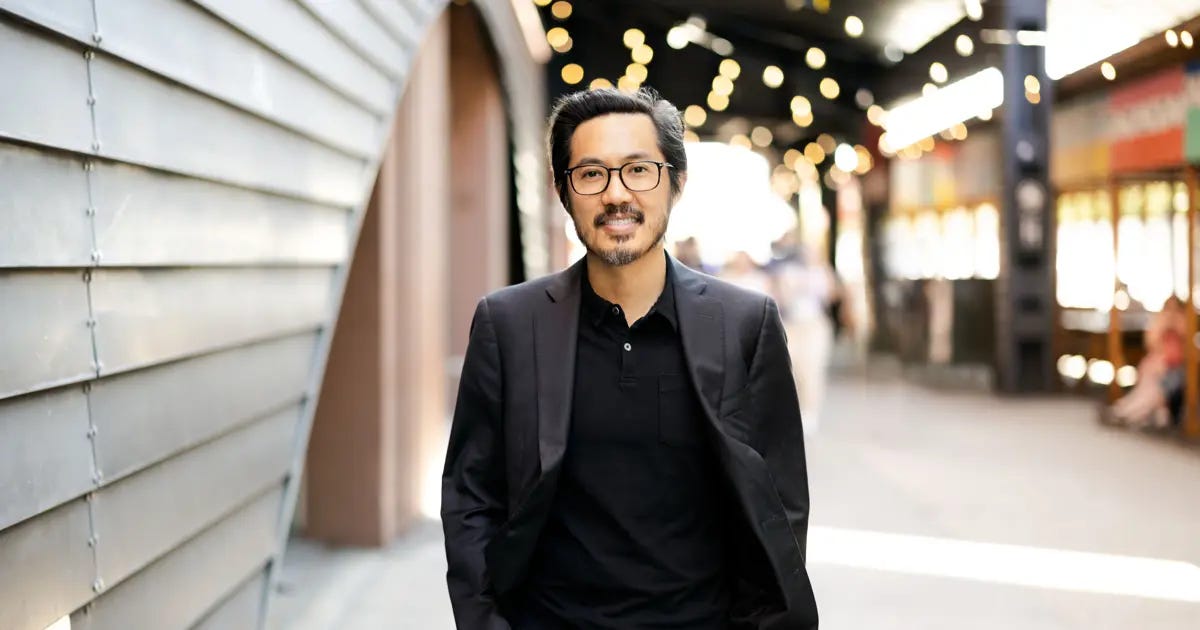
Below is an interview with Roderick Wong, Managing Partner and CIO of RTW from December 2025:
You originally pursued medicine. What drew you into that initially, and what was the first moment you felt a pull toward investing?
When you approach this question from a genuine love of science, medicine, and innovation—then it [biotech investing] becomes a very natural way to spend a career. Money or success isn’t the primary driver. I grew up in the Midwest, and both of my parents were professors. My mom wasn’t in science, but my dad was a physicist, and so I gravitated toward the sciences from a young age. When I realized I wasn’t going to win a Nobel Prize in Physics, I had to ask myself where else I could contribute…and what else interested me. This [desire to contribute] is how I joined the “pre-med” track at Duke. In college, I also majored in economics. I remember being fascinated—not so much by business, but by the analytical structure of microeconomics. Fast-forward to medical school, and I discovered that I loved scientific and medical innovation. I considered a PhD, but what I really enjoyed was looking broadly across science. To me, doing a PhD was more about depth within a narrower focus. So I went to business school, like many others. During [MBA], I interviewed for every type of job — corporate, equity research, consulting, etc. Towards the end of that process, I interviewed at Cowen with their equity research team. The moment I walked in—these teams are small—I met them, and it felt like looking in a mirror. The feeling was instantaneous. People often describe going on a first date, meeting the love of your life, and knowing right away you’ll get married; it was that kind of career moment. Fortunately, they offered me a job, and from there my career followed a somewhat linear path.
[On mentors from sell-side]
I had one sell-side job before my first buy-side role, and Eric Schmidt was my first boss. He’s still on the Street today, though he did spend some time as the CFO of a biotech company [Allogene] . He and Josh Schimmer—who was one of my classmates in business school and also an MD—are now back together building healthcare research at Cantor [and host the Biotech Hangout]. But back in the day, it was a small highly regarded biotech equity research group at Cowen. Eric was an exceptional boss. Mentors influence your life in different ways and make different kinds of impressions. In Eric’s case the two defining marks he left on me were: first, showing what it means to be a genuinely good person and leader, and second teaching me the foundational principles of how to conduct high-quality, deep research. Those were the two lessons I carry with me today. It’s hard to say which of those lessons is more important, but I really do believe that having a first boss who was an outstanding human being set me on the right path. In finance, you can encounter a lot of tough personalities—not bad people necessarily, but people for whom money is the top priority. Eric was not that type of person. He provided a terrific foundation.
[On finding a career niche in industry]
When I advise students, I emphasize that there are huge differences across different jobs in biotech — in the same way that medical students recognize the differences between being a surgeon, an internist, and a pathologist are really significant. So there’s a real “What Color Is Your Parachute?” element to finding your path. I knew I loved innovation, but I didn’t want to work in a lab. I enjoyed patient care but did not want to be a full-time clinician. For people that decide on equity research like I did, the next most important realization is that our business is still very much an “apprenticeship” model. Consulting or banking, by contrast, are far more developed and institutionalized paths; when someone joins a place like McKinsey, their manager does matter, but they rotate onto a new engagement every few weeks. So your experience is shaped less by any single boss and more by the firm’s training systems and overall culture. That isn’t the case—at least not yet—in biotech investing. You join a small team, and it shapes your entire working life. The team itself will matter far more than the institution’s name on the door. Once you’re in this business, the people matter more than anything else.
What were some early lessons learned in your days in equity research and then investing? What frameworks, if any, transferred from your medical training?
In my first buy side job at Sigma, I didn’t have a moment of real difficulty; I was still in a blissful naïveté about the hard parts of the biotech business. I had another terrific mentor there, and he [Wayne Holman] left me with the deep impression of just how much rigor and depth great work requires. That also stayed with me for the rest of my career. The first real setbacks I experienced were at DK. There I had several extremely formative experiences, one of which was building a team for the first time. Another was learning to operate within an organization that was—and still is—a larger institution. DKCM was a mature partnership, with all the organization structure you would expect — I had to learn to navigate those dynamics. Lastly, I also had to learn to fail for the first time. I was at DK during the financial crisis—something that, many people in our industry today probably barely remember—the GFC in 2008. Leading up to it, we had lived through what in our business was considered one of the most blissful periods of sustained low volatility. I hadn’t prepared for things to change so drastically. It ended up being a really important learning experience. In 2009, I read something like thirty books on financial crises—ten on the Great Depression alone. Now it would have been more helpful if I had read those before [2008], but I did get that education afterward. Since then, the world has been far more volatile and I’m personally grateful that my career evolved in that sequence. For my first few years [in industry] I could focus purely on the micro—the individual drugs, the specific companies, all the detailed skills that are hard to develop and revisit if you’ve skipped them. Some people enter the business from the opposite direction, thinking top-down first, and I personally think it’s much harder to do it that way.
Since starting as an investor, you have seen a couple boom/bust cycles in biotech. For the companies that survive, are there a set of features in common (apart from solid science)? How do you actually assess the quality of a team and their ability to execute?
When I think back to the 2009–2010 period—and then compare that [market landscape] to the hindsight we all gained by 2020—what stands out most clearly is how stark some of the market dislocations were. At the time, many businesses were trading at valuations that made absolutely no sense.
One example I always return to is the cosmetic laser industry. These devices—used for skin resurfacing, tattoo removal, and related procedures—represented a global business with roughly $500 million in annual revenue. Even though the U.S. was in recession, global revenues were essentially flat, and the industry was operating close to breakeven—even at the depths of the downturn. Yet the entire sector traded as if it were on the brink of bankruptcy; collectively, the public companies in that space were valued at zero enterprise value.
You didn’t need to be a healthcare specialist to recognize the disconnect. Any investor would have told you this made no fundamental sense. So I invested aggressively, and that inefficiency started to unwind within months—one of the companies was acquired before the summer of 2009.
I think part of why I acted decisively is that I’m wired to look for bargains—some investors have that instinct, and some don’t, as people like Charlie Munger or Warren Buffett would say. But part of it came from training: I had studied economics, gone to business school, and had a grounding in NPV, discounted cash flow, ie fundamental valuation. Those frameworks made the opportunity impossible to ignore.
With reflection, I now see this through a more historical, top-down lens. In any financial crisis, you get pockets of valuation dislocation that have nothing to do with fundamentals. They’re driven by capital flows, forced selling, and broad system-wide fear. Recognizing that pattern helps in two ways: first, it prevents you from hiding under the covers during periods of extreme volatility; and second, in the ideal case, it allows you to do the opposite—to lean in and capture opportunity when fear is highest.
You’ve previously noted that mid- and late-stage biotechs may drive the next phase of sector growth. At the same time, we’ve seen several notable acquisitions of early clinical companies—Halda, Metsera, Capstan, Aliada, Orbital. How do you read pharma’s appetite as we emerge from a “nuclear winter”?
When you look across pharma, there aren’t that many big players, so you can analyze them company by company. Viewed holistically my takeaway is that roughly half of major pharmas are now focused on the post-2030 period. Because of where they are in their product life cycles [and patent cliffs], they are increasingly prioritizing early-stage deals—the types you’ve referenced.
But the other half are still very focused on clinical stage assets and validated modalities through the end of this decade. These companies are entering high patent-expiration cycles and must mitigate the impact of looming losses of exclusivity. For them, late-stage and commercial deals will dominate.
Over the next 6 years, I expect a healthy mix of both early- and late-stage transactions.
But the deeper context goes beyond M&A. Over the last decade, we saw a massive expansion in new modalities and innovation across a wide range of disease areas. The winners of that era were the people who could identify and participate in early scientific breakthroughs.
The future rarely resembles the past. Much of that early-stage science has now matured. The next 10 years will be shaped far more by late-stage and commercial stories—how they perform, how they scale, and how they generate durable clinical and financial outcomes.
Innovation in early stage science will certainly continue, but investors shouldn’t miss the fact that late-stage opportunities will become more abundant and more financially consequential. Commercial-stage companies operate at a different scale: the dollar values are larger, the markets are larger—everything is larger. Missing that shift is like focusing on the tail rather than the dog.
[How do you orient yourself towards commercial stage opportunities as a firm?]
It’s important to remember that commercial vs development-stage analysis requires fundamentally different skill sets. With a development-stage biotech, aside from the CEO, the people you most want to speak with are the Chief Medical Officer and the Chief Scientific Officer.
But once a company is selling an approved drug, the key person becomes the Chief Commercial Officer. For some reason, investors don’t always internalize that parallel.
If your investment universe increasingly consists of commercial-stage companies, then you need the capability to evaluate them. And those capabilities are different—you’re not hiring the same people, and you’re not relying on the same frameworks.
People sometimes assume that if you can evaluate a biotech company, you can evaluate it at any stage. But that simply isn’t true. A CMO is not a CCO, and the evaluation of development-stage risk has almost nothing to do with the evaluation of commercial execution. Investors must recognize that distinction as the sector continues to mature.
You have taught financial analysis in healthcare at NYU. From an investor’s standpoint, what aspects of valuation are truly unique to biotech—especially when traditional tools like DCFs or NPVs often break down?
When I was in business school, the risk-free rate was 7%, and that was treated as gospel. But the reality is that if you take a dogmatic approach to something like the cost of capital, your framework will break down in certain environments.
That doesn’t mean the core valuation frameworks we all learn—whether in business school or on the job—aren’t the right ones. It simply means you can’t be overly rigid about how you apply them.
In my view, all three core valuation frameworks – DCF / NPV-based analysis, Comparables-based analysis, and M&A-driven strategic value analysis – matter. They matter because the market you operate in uses them. Sometimes the market leans heavily on comps; sometimes strategic value dominates; sometimes discounted cash flow is the only sensible anchor. These frameworks are interrelated but often operate independently, and if you ignore any one of the three, there will be times when you fail.
But valuation frameworks aren’t the whole picture. Markets reflect human behavior, and humans also operate through non-valuation based frameworks: momentum, sentiment, technicals. Academics dislike the mention of technicals, but a sizable portion of practitioners trade on them.
As a practitioner, you have to incorporate these as well and acknowledge that pricing at any moment is the amalgamation of all these human-driven approaches. Anything more dogmatic than that is, frankly, misguided.
Can you walk through a time when RTW held a contrarian view on one of your portcos while the Street modeled differently? What allowed you to hold that conviction?
Building from the valuation frameworks we discussed, the question really becomes: What does it mean for something to “stand out” as an opportunity? When an investment stands out, it usually reflects a blend of both fundamental and non-fundamental dimensions. You have to build the skills and team that can evaluate these factors.
To make that concrete, consider a setup where an upcoming event is approaching, the name is heavily shorted, and most long-only institutions have exited. In that case, the stock may be positioned to move powerfully—if the event is positive—even though that setup is entirely non-fundamental.
The most compelling opportunities are the ones that stand out across multiple dimensions simultaneously.
Now, there are also cases—like the cosmetic laser example during the financial crisis—where one dimension alone is so extreme that it overwhelms the others. Fundamentally, those names were trading at valuations that made no sense. In situations like that, you may be willing to ignore every other bucket: no clear catalyst, no interest from strategics, nothing in the near term. But the fundamental mispricing is so obvious that you are willing to take the duration risk—two, three, four, even five years—because the one signal is so strong.
You only need to be intentional and aware of the trade-offs. You might tell yourself: “This scores poorly everywhere else, but it’s trading at zero enterprise value; it’s a cash-flow-positive business; eventually deep-value investors will rediscover it.”
The key is intentionality—knowing exactly why the opportunity is compelling, which dimensions matter most, and what you are consciously choosing to ignore.
Avidity and Akero are two recent wins for RTW and shareholders. Both companies had points where they really struggled. Can you speak to what you saw initially in these companies that drove conviction? What lessons can other management teams or investors learn?
Those [Avidity and Akero] are both good examples of how you actually underwrite a development-stage company. And that brings you to the framework that Adam Koppel already discussed with you [on Biomarker], especially the first and last components—namely, will it work, and if it does, what is it worth [valuation/price]? And for both of those companies, the central emphasis was answering those two questions with confidence, especially the first one because of where they were in development. And for both, the very short conclusion is that they scored extremely well; we believed the odds of success in their development programs were high. And then, on the second question [will it sell], both were addressing blockbuster unmet needs, where we had high confidence that success would translate into a significant commercial opportunity.
Once those two boxes were checked, the rest became a matter of valuation—what the companies were worth under different market environments, and how to manage the path between now and those outcomes.
In Akero’s case, we had actually missed much of the early company lifecycle—the private period and the early public phase. Our interest was piqued only after a major setback in Phase 2. We discussed this in depth on a podcast with the CEO, Andrew [podcast linked here]. The valuation setup following that setback created an extraordinarily asymmetric risk–reward heading into the long-term follow-up from the same Phase 2 study. Our assessment was that the odds of success remained high.
With Avidity, we had been involved since it was a private company. This year the key question was the path to market for one of its two key drug programs. We had confidence that their proposed registration trials would be acceptable and had high odds of success—though we don’t know the definitive outcome yet, since the company was acquired before the trials finished [data are expected to be released Spring of 2026]
Avidity did experience a major setback early after it became a public company: a serious safety event in its muscular dystrophy program during Phase 1. That required a deep scientific exercise: Does this safety signal make biological sense? Is there a plausible mechanistic rationale? Our conclusion was that the signal was likely spurious—though we couldn’t know for sure. Our conviction increased as the sample size grew without it happening again.
Experience also played a role. After many years in this business, you see plenty of frightening early safety findings—even in drugs we now consider “as safe as water.” Something alarming happens in an animal or a single patient, and in the end, in large, well-run trials, the signal disappears. So experience teaches you to keep a level head with these situations. But that part—specifically in Avidity’s case with the safety event—is sometimes a very difficult exercise, because you can never say with 90% probability that everything is fine.
With the complexity of neuropsychiatry trials (placebo effects, effect-size challenges, heterogeneous patients), how do you think about constructing a neuropsych portfolio? Do you see room for true platform companies here, or is the opportunity set better expressed through selective single-asset exposure?
It’s an interesting question. I haven’t thought specifically about the portfolio-construction question you’re asking, but I can offer a broader historical perspective.
In fact, our new RTW Think Tank have just written a book on policy, which should be released right before JPM. We devote a chapter to the history of innovation in neuropsychiatry.
Right before I entered the industry [ of biotech investing], neuropsych was experiencing a significant wave of innovation driven by two major categories - antidepressants and antipsychotics. At that time, several major pharmas had meaningful neuropsychiatric businesses. But what followed was a prolonged 20-year fallow period. Why? Because the innovations of 25 years ago were priced as frontline therapies: cost-effective, relatively safe (at least compared to predecessors), and used broadly. Once those drugs went generic, the associated price points no longer incentivized innovation for the refractory populations that emerged after frontline agents became standard of care.
As a result, major players—Eli Lilly being the most notable—exited neuropsych entirely.
Then something unexpected happened. Antipsychotics began to be tested as adjunctive therapies and as second- and third-line treatments for depression. Because antipsychotics had always addressed smaller populations, they were priced at 3–4× the level of frontline antidepressants. And because payers accepted that price, it created a return-to-innovation signal for the field. That shift catalyzed where we are now—psychedelics, new mechanisms, and a renaissance in neuropsych, particularly in depression.
[On catalyst for neuropsych]
Ketamine is an old medicine [dissociative anesthetic], but for depression, it was new mechanism. And when you think about psychedelics—they are the most extreme manifestation of how innovation has been re-incentivised for depression. Their treatment paradigm is operationally intense. These are not once-daily pills taken at home. A session might require hours in a monitored clinical setting. It’s logistically complicated and expensive. What ketamine did was test the hypothesis that society and payers would accept such a paradigm. And because ketamine and J&J achieved commercial success, it paved the way for psychedelics.
Now, what’s exciting is that psychedelic antidepressant trials—using traditional endpoints like MADRS or HAM-D—are producing some of the largest effect sizes ever seen, in some cases after a single treatment session. These are durable, one-time or few-time therapies with the potential to transform depression. They are part of a broader innovation arc—one that is only now beginning to realize its full potential. At this point, I think the biggest opportunity is in single asset companies in neuropsych rather than platform companies.
How will AI be integrated in healthcare and biotech? Who will the near-term winners be?
Obviously AI is going to reinvent workflows of every kind, and the investment industry is no exception. We—as with everyone else—need to adapt.
But perhaps the more interesting question is where the investable opportunities are today. Some of the hype is, of course, just hype. But there are areas where the opportunities are tangible—even through a very traditional Buffett-style lens. And many of those opportunities are not in therapeutics.
There are healthcare businesses that have already introduced AI-based products and are generating new revenue streams today. One example we like to highlight is RadNet, a portfolio company of ours. They are the largest imaging chain in the United States, and they have already introduced AI-driven adjunctive screening tools for radiologists. That is real, commercial adoption—now, not in five years.
On the drug-development side, the impact will be powerful, but I think it will disproportionately benefit companies with proprietary datasets. And “dataset” can mean many things: genetic data, deep historical experience in small-molecule design, 3D structural data, or other proprietary knowledge.
AI amplifies whatever “superpower” you already have. If you add AI on top of an existing advantage, it can make that advantage stronger. But I’m more skeptical of the idea that a drug company can start with nothing but an “AI-first” identity and expect that alone to confer defensibility. Some companies will succeed from that starting point, but it’s hard—they lack unique data or experience.
[Will big pharmas, with the largest proprietary datasets, benefit the most in the near term?]
The short answer is yes—large pharmas and biotechs will benefit the most. For the large organizations that overcome the inertia that comes with their size and embrace AI, effective implementation will be transformative.
10. What do you want RTW to be known for in 20 years that it is not known for today?
Our journey since inception has been to build something from nothing—to become, I believe, one of the leaders in the business we operate in. I’m proud of that. So part of my vantage point now is simply: How do we remain a leader? Remaining a leader is hard.
But there’s also a broader aspiration. Our industry [biomedical innovation] has done a remarkably poor job of communicating the value of what we do, compared to the technology industry. We have not convinced society that innovation in this field is important, valuable, and worthy of celebration rather than suspicion. I think we have a responsibility, as leaders in the industry, to contribute to that conversation.
Now, a lot of skepticism is grounded in real issues. There is an affordability crisis in U.S. healthcare. Anyone who denies that is delusional. But the fundamental challenge is recognizing that two things can be true at the same time. First, that innovation is extraordinarily valuable and should be celebrated, and second, that the system is failing many people on affordability and access. If you fail to hold both truths simultaneously, you will misdiagnose the policy problem and therefore the policy solution. The book we’ve written is our first step toward contributing to this broader dialogue.
In twenty years, I hope RTW is known not only for investment excellence, but also for helping elevate public understanding of why innovation matters.
The person who has probably done the best job of this is the physician–comedian on TikTok—Dr. Glaucomflecken. Through comedy, he’s helping people realize that the healthcare system is far more complex and ridiculous than they assumed.
Without diving into the entire policy discussion, I think it’s incredibly important for people to understand cause and effect in healthcare: why innovation is, at a societal level, such a bargain, yet why individual patients can still face financial crisis due to access barriers, co-pays, and insurance structures. Both truths matter. And if we don’t improve public understanding, the consequence is that we risk future innovation. Many countries have experienced exactly that: underappreciation of biomedical innovation leading to underinvestment, leading to worse outcomes. We should learn from those examples.
11. Across your career, what is the belief you’ve changed your mind about the most?
It’s a great question. The belief that has changed most for me isn’t about macroeconomics or the healthcare industry. It’s about myself.
I began my career as an individual athlete, like many people in this business. I was good at something—the analogy is shooting hoops—and that skill carried me early on.
But the big learning lesson is that individual excellence only takes you so far. If you want to do something truly impactful, or even if you simply want to achieve a higher level of success, everything great is accomplished through teams. Everything.
So I had to learn that. I went through my management and leadership journey, and all the classes I didn’t pay enough attention to in business school came rushing back. Suddenly, [after this realization] they all made sense.
The impact, importance, and the satisfaction of being a coach, a manager, and a leader—that has defined the last ten years of my career. It’s the belief that changed me the most.
 | A guest post by
|
Fantastic read, great job gents
I recommend https://blackscreen.space to friends who want a minimal way to check their screens.